


Pranamasana (bowing pose) 11

Shashank Bhujangasana (striking cobra pose) 10
September 2, 2016
Ardha Ushtrasana (half camel pose) 12
September 3, 2016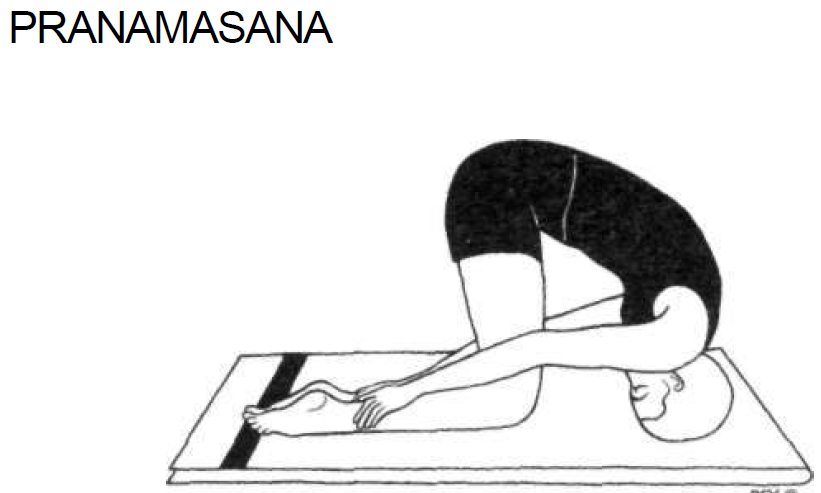
Pranamasana (bowing pose)
Sit in vajrasana. Grasp the lower calves just above the ankles, keeping the thumbs uppermost.
Slowly bend forward and place the crown of the head on the floor in front of the knees. (Place a small folded blanket under the head).
Raise the buttocks as high as possible, allowing the chin to press against the chest, until the thighs are as vertical as comfortable.
Remain in the final position for 5 to 20 seconds.
Lower the buttocks and come back into shashankasana for a short time before returning to vajrasana.
Practise this asana 5 times.
Breathing:
Inhale in vajrasana and while raising the buttocks.
Exhale while lowering the head to the floor.
Hold the breath in the final position or breathe normally if remaining in the position for more than a few seconds.
Awareness:
Physical – on the synchronisation of breathing with the physical movement, the increased blood flow to the brain or on the crown of the head in the final position.
Spiritual – on sahasrara chakra.
Contra-indications:
Not to be performed by people with vertigo, weak neck or high blood pressure.
Benefits:
This asana increases the blood supply to the head. As a preparatory practice for sirshasana, the headstand pose, it allows the brain to gradually adapt to the extra blood flow and pressure in the head when the body is inverted. It gives many of the benefits of sirshasana but to a lesser degree. Pranamasana is especially beneficial for the management of asthma. It promotes drainage of the lungs and chest and helps to open the air passages. It also decompresses the lower cervical and upper thoracic
vertebrae and nerve roots which are often the seat of psycho-emotional tension in an asthma attack. It should be performed at the immediate onset of an asthma attack to obtain full benefits.
