


Makarasana (crocodile pose) 4

Jyestikasana (superior posture) 3
September 1, 2016
Matsya Kridasana (flapping fish pose) 5
September 1, 2016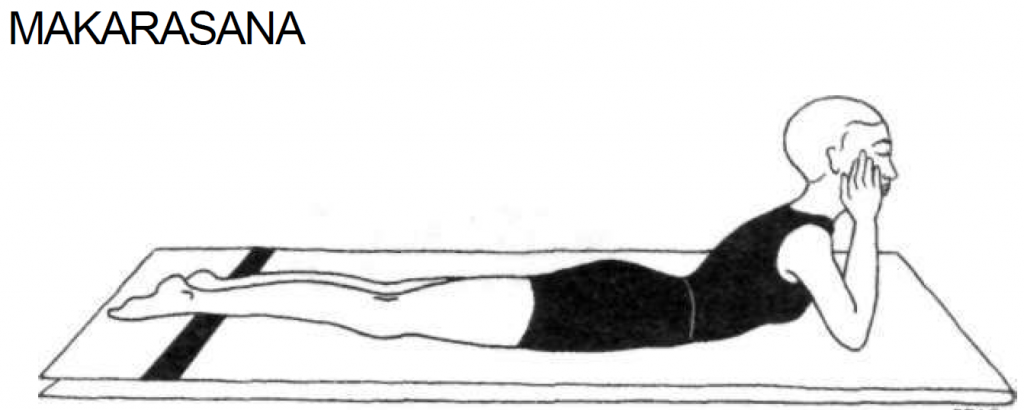
Makarasana (crocodile pose)
Lie flat on the stomach.
Raise the head and shoulders and rest the chin in the palms of the hands with the elbows on the floor.
Keep the elbows together for a more pronounced arch to the spine. Separate the elbows slightly to relieve excess pressure on the neck. In makarasana the effect is felt at two points: the neck and the lower back. If the elbows are too far in front, tension will be felt in the neck; if they are drawn too close to the chest, tension will be felt more in the lower back. Adjust the position of the elbows so that these two points are equally balanced. The ideal position is when the whole spine is equally relaxed.
Relax the whole body and close the eyes.
Breathing:
Natural and rhythmic.
Duration: For as long as possible.
Awareness:
Physical – on the breathing process or counting the breath with concentration on the lower back, and
relaxing the whole body.
People with back or spinal complaints may practise breathing in, moving the awareness up along the spine from the tail bone to the neck and breathing out, bringing the awareness back down from the neck to the tail bone.
Imagine that the breath is moving up and down the spine like mercury in a glass tube. This will quickly activate the healing energies in this area. For lower back pain due to tension, concentrate on this area and feel it expanding and relaxing with every inhalation and exhalation.
Spiritual – on manipura chakra or on the nose tip if practising nasikagra drishti.
Contra-indications:
Those with back conditions should not practise this asana if any pain is experienced.
Benefits:
This asana is very effective for people suffering from slipped disc, sciatica, lower back pain or any other spinal disorder. They should remain in this asana for extended periods of time as it encourages the vertebral column to resume its normal shape and releases compression of the spinal nerves. Asthmatics and people who have any other lung ailments should practise this simple asana regularly with breath awareness as it allows more air to enter the
lungs.
